

Before pattern or colour, a rug is a material — and the fibre you choose decides how it feels underfoot, how it wears, and where it belongs. This is a plain guide to the natural rug fibres, so you can choose the right one for the room rather than the prettiest one in the photo.

Ashen Nomad — Grey Tribal Rug — shop the rug at Slow Objet.
Wool: the default
Wool is the one to reach for first. It is durable, naturally soft and warm underfoot, springs back from footfall, and is naturally stain-resistant thanks to the lanolin in the fibre. It also takes dye beautifully. For living rooms, bedrooms and anywhere you actually live, wool is the sensible, lasting choice.

Onyx Bloom — Charcoal Wool Rug — shop the rug at Slow Objet.
Cotton and flatweaves
Cotton is lighter, more casual and more affordable, and it is often used in flatweaves — thinner, reversible rugs with no pile. They are easy to lift and wash and suit kitchens, hallways and layering over a larger rug. What they trade away is the plush underfoot feel of wool.

Almond Meander — Cream Flatweave Rug — shop the rug at Slow Objet.
Jute and natural fibres
Jute, sisal and seagrass are the textural, grounding options — wonderfully natural to look at and hard-wearing, if a little coarser to the touch. A jute runner or base layer brings warmth and an organic texture, and pairs beautifully under a softer wool rug. Keep them to drier rooms, as natural fibres dislike damp.

Shoreline Path — Natural Jute Runner — shop the rug at Slow Objet.
And silk
Silk is the luxury note: luminous, fine and cool, with astonishing detail — but delicate, and best kept to low-traffic spaces like a bedroom or a study rather than a hallway. Often it appears as a highlight within a wool rug rather than the whole.
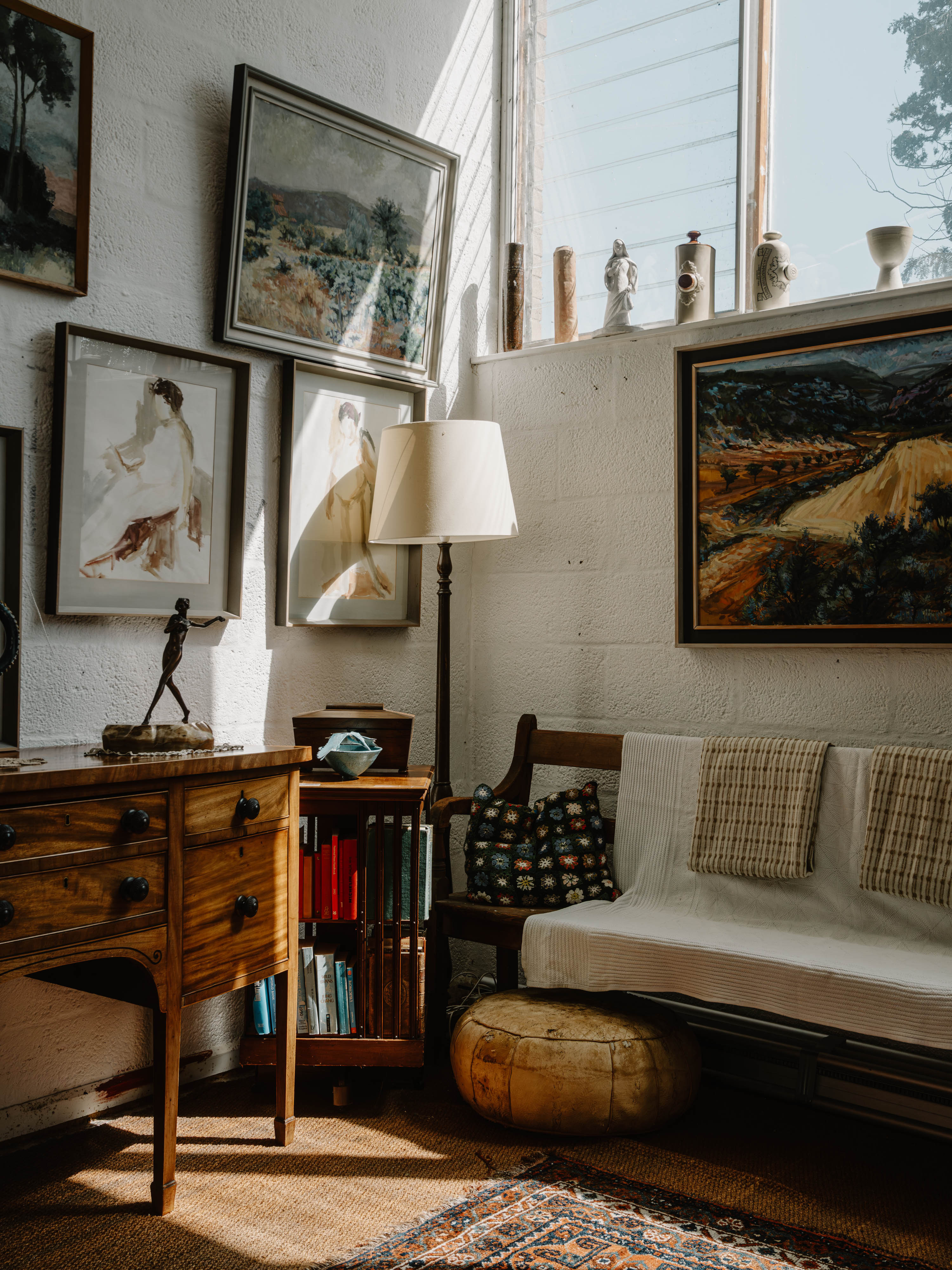
Photography by Adam Firman for The Modern House.
Choosing by room
In short: wool where you live, cotton or flatweave where you want light and washable, jute for texture and grounding, silk for a low-traffic luxury. Our own rugs are hand-tufted in natural wool for exactly these reasons — more in our guide to choosing a handmade rug.

Walnut Lattice — Brown Wool Rug — shop the rug at Slow Objet.
Matching the fibre to the room
The quickest way to choose well is to start from the room, not the rug. Wool where you actually live — living rooms, bedrooms, anywhere feet and furniture gather. Cotton or a flatweave where you want something light and washable, like a kitchen or a hallway. Jute and natural fibres where you want texture and grounding in a drier room. Silk kept to low-traffic spaces where its shine can be enjoyed and protected.

Ashen Meander — Grey Flatweave Rug — shop the rug at Slow Objet.
How each fibre wears
Durability is where the fibres really separate. Wool is the all-rounder: springy, naturally stain-resistant thanks to its lanolin, and good for a decade or two of daily use, longer if hand-knotted. Cotton is softer-wearing and best where it can be washed. Jute and sisal are tough but coarser and dislike damp. Silk is the most delicate of all. Buy the fibre to the traffic, and the rug lasts the way it should.

Cocoa Frame — Brown Wool Rug — shop the rug at Slow Objet.
Caring for natural fibres
Natural fibres ask little, but they do ask. Vacuum gently without a hard beater bar, rotate the rug a couple of times a year so it wears evenly, and blot spills rather than rubbing them in. Keep jute and sisal out of wet rooms, and have a good wool rug professionally cleaned every few years. Treated this way, a natural-fibre rug repays you by ageing into the room rather than out of it.

Photography by Rachel Ferriman for The Modern House.

Bone Ripple — Ivory Textured Rug — shop the rug at Slow Objet.
Texture is a material decision
We tend to talk about a rug's colour and pattern, but the thing you feel first is its texture — and texture is a direct result of the fibre and the weave. A deep wool pile reads as warmth; a flatweave as crispness and light; jute as something honest and grounding underfoot. Choosing a fibre is really choosing how a room will feel, not just how it will look.
Photography by Rachel Ferriman for The Modern House.
Wool, in a little more depth
If you remember only one fibre, remember wool. It is the reason our own rugs are made the way they are: naturally warm, springy enough to bounce back from a decade of footfall, and stain-resistant thanks to the lanolin the fleece provides for free. It also takes natural dye beautifully, which is why a wool rug can hold colour that feels alive rather than flat. For most rooms in most homes, it is simply the right answer — the sensible default you rarely regret.

Juniper Frame — Green Bordered Rug — shop the rug at Slow Objet.
A word on blends, and honesty
Plenty of rugs mix fibres, and that is not a bad thing: a little silk in a wool rug adds a highlight, and a cotton foundation gives a flatweave its structure. What matters is that the blend is described honestly, so you know what you are buying and how to care for it. We would rather tell you a rug is hand-tufted wool than dress it up as something rarer. Knowing the fibre is most of knowing the rug.
Questions, answered
What is the most durable rug fibre?
Wool, for everyday rooms — it is springy, naturally stain-resistant and long-lasting. Hand-knotted wool lasts longest of all.
Which rug fibre is softest underfoot?
Wool for warm, plush softness; silk for a fine, luminous feel, though silk is delicate and best kept to low-traffic rooms.
Are jute rugs any good?
Yes, for texture and grounding in dry rooms and as a base layer under a softer rug — just keep them away from damp, as natural fibres dislike moisture.
What rug material is best for high-traffic areas?
Wool for softness with durability, or a tight flatweave or jute where you want something hard-wearing and easy to lift and clean.
Is wool or cotton better for a rug?
Wool for warmth, softness and durability in rooms you live in; cotton for a lighter, more washable rug in kitchens, hallways, or for layering over a larger rug.
Do wool rugs shed?
A new wool rug may release a little loose fibre at first; it settles within a few weeks of gentle vacuuming and is a normal sign of natural wool, not a fault.
Which rug fibre is best if I have allergies?
Tightly woven wool or a washable cotton flatweave are easiest to keep clean; vacuum regularly and choose a low, dense pile over a deep, shaggy one.
Find the fibre for your room — explore our hand-tufted rugs.
Rugs by Slow Objet, hand-tufted in India. Interior and craft photography courtesy of The Modern House, credited beside each image.
Purposeful design, crafted for a lifetime.