

Layering rugs is the oldest trick a stylist has for making a room feel gathered, warm and considered — and the easiest to get wrong. Done well, two rugs add depth and define a space; done badly, they just look like clutter on the floor. Here is how to layer rugs like a stylist, without the mess, beginning as always from the floor up.

Linen Lattice — Oat Lattice Rug — shop the rug at Slow Objet.
Start with a big, plain base
Every good layered look starts with a large, quiet base rug — usually a flatweave or a natural jute, plain enough to disappear. Its job is to fill the room and set the scale; it is the mount, not the picture. Go as large as the room allows, so the base reads as the floor rather than an island stranded in the middle. Get this layer right and the rest is easy.
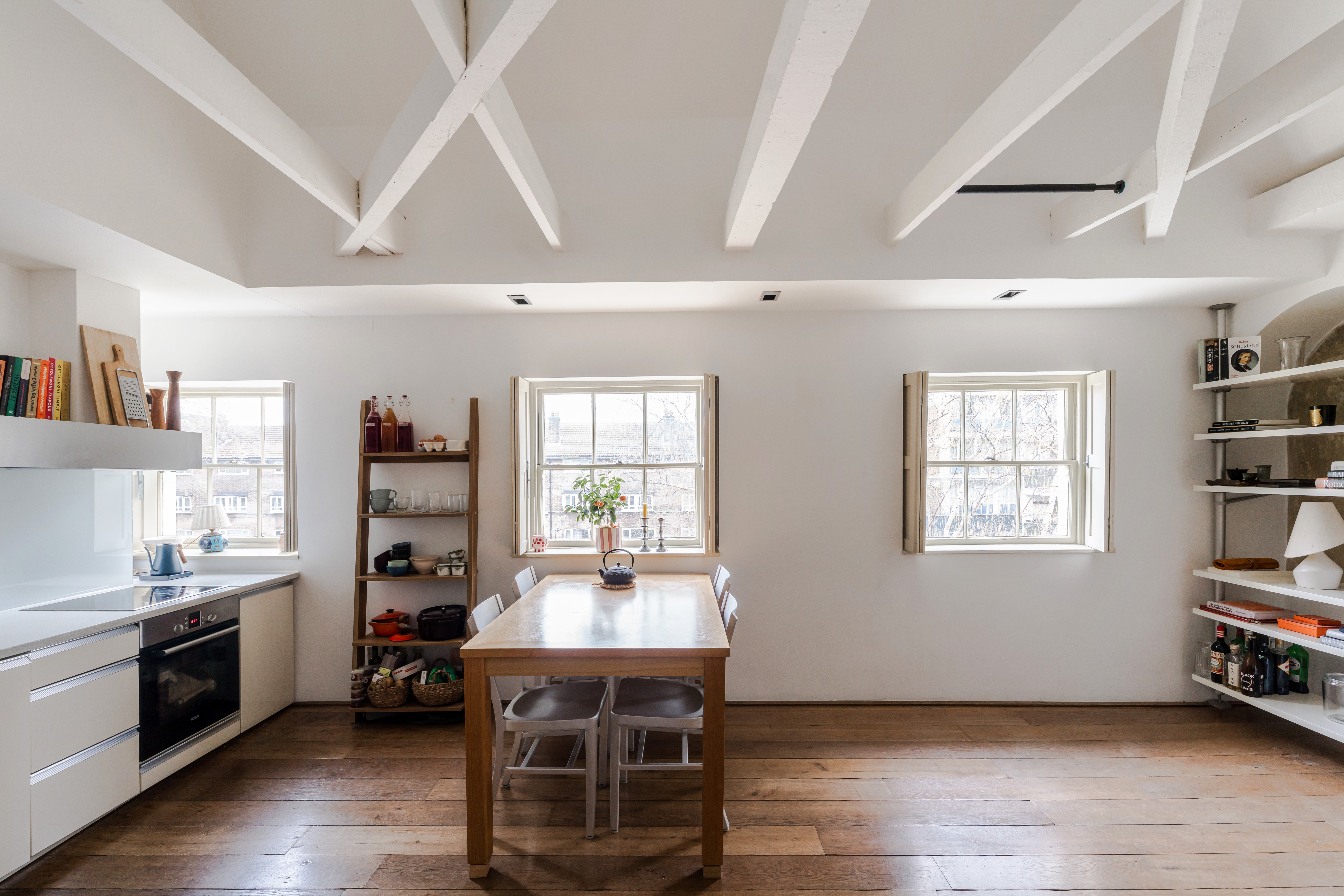
Photography by James Tarry for The Modern House.
Add a smaller rug with character on top
On top of the base goes the piece with the personality — smaller, softer, with the pattern or colour you actually want to see. This is where a hand-tufted wool rug earns its place: laid over a plain base, its weave and warmth read clearly instead of competing with the room. The contrast between a flat, neutral base and a soft, characterful top is the whole effect in one move.

Chalk Stillness — Chalk Wool Rug — shop the rug at Slow Objet.
Why stylists layer rugs at all
Layering is not just decorative. It defines a zone within an open-plan room, adds warmth and softness underfoot, quietly covers a floor you would rather not look at, and lets you change a room's character for the price of one smaller rug rather than replacing everything. It is the most reversible, least wasteful way to shift a room — very much in the spirit of a slow home.

Indigo Meander — Indigo Wool Rug — shop the rug at Slow Objet.
The rules that keep it from looking cluttered
Three quiet rules do most of the work. First, contrast the layers — flat under soft, plain under patterned — so they read as deliberate, not accidental. Second, keep the palette tight; two or three natural tones across both rugs, never a clash. Third, anchor the top rug to something — a sofa, a bed, a coffee table — so it looks placed rather than dropped. Break those and you get clutter; keep them and you get calm.
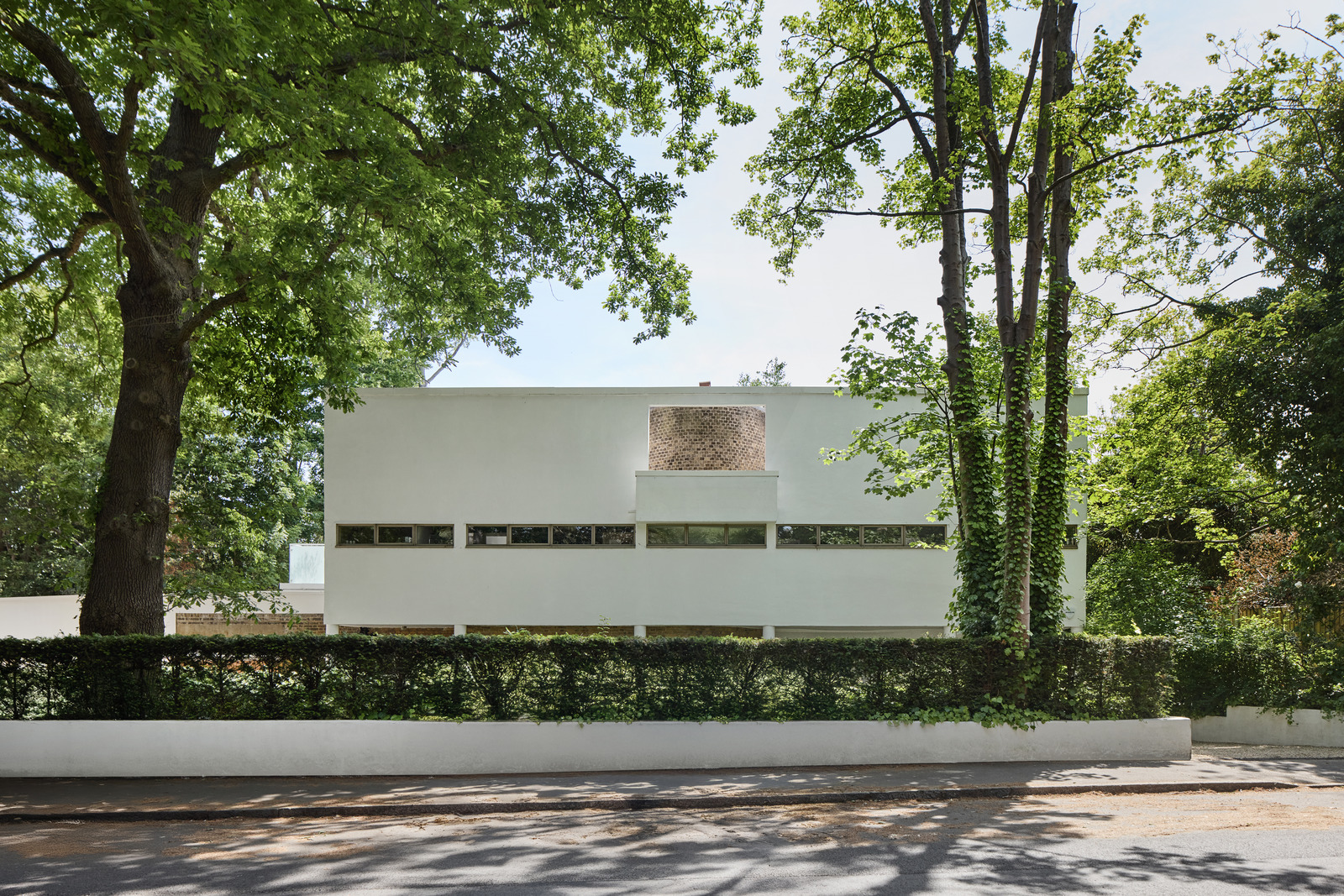
Photography by Dan Glasser for The Modern House.
Layering over carpet
You can layer over a fitted carpet too, and in a rented home it is often the only way to get real texture underfoot. Choose a flatter, hard-wearing wool rug over a low-pile carpet to define a seating area or warm a bedroom, and use a thin anti-slip pad so nothing shifts. It is the quickest way to make a bland, builder-grey carpet feel like a room you chose.

Midnight Field — Charcoal Wool Rug — shop the rug at Slow Objet.
Where layering works best
Some rooms are made for it. In a living room, a base plus a soft top pulls the seating together and warms the whole floor. In a bedroom, a large base with a smaller rug at the bedside gives your feet somewhere kind to land. In a hallway, a runner over a plain floor adds welcome and cuts the echo. Match the layers to how the room is actually used, and the styling takes care of itself.
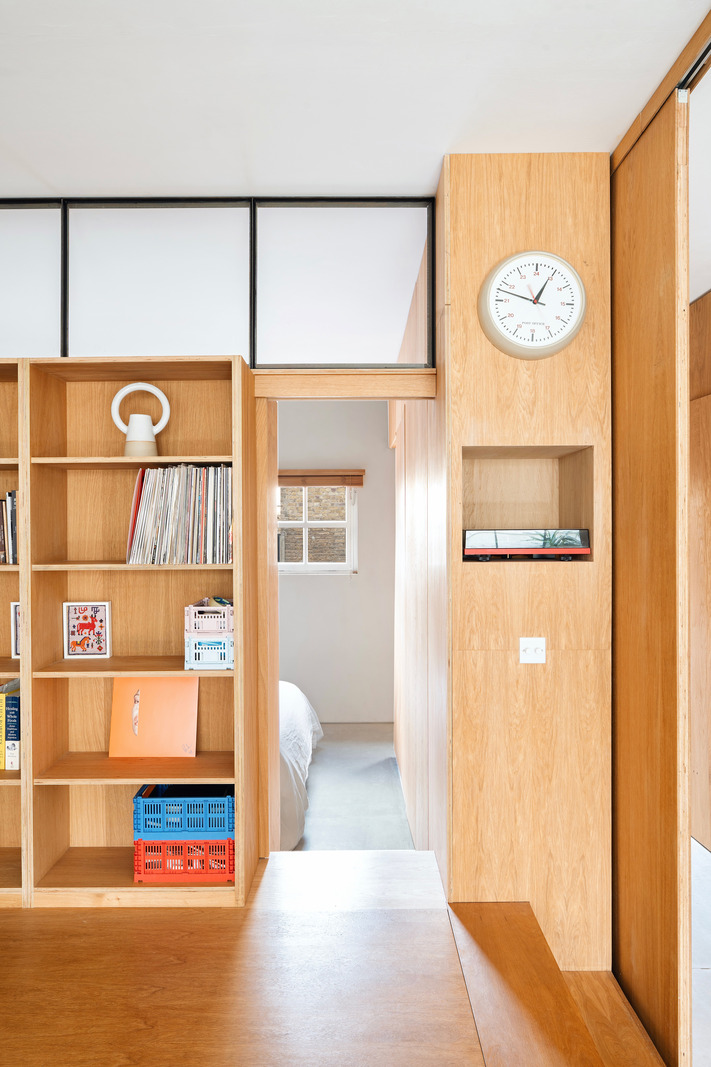
Photography by Morgan Pollard for The Modern House.
Keep it calm
The point of layering is not to fill the floor but to make it feel considered. When in doubt, take one thing away rather than adding another — the same instinct behind the whole slow home. Two well-chosen rugs, a tight palette and a clear anchor will always beat three competing ones. Layer for warmth and depth, not for the sake of it.

Honey Frame — Honey Bordered Rug — shop the rug at Slow Objet.
Getting the sizes right
Proportion is what separates a considered layer from a mistake. As a rule, leave a clear border of the base rug showing all the way around the top one — roughly eight to twelve inches — so the two read as distinct layers rather than one lump. The top rug should still be big enough to do its job: to sit under the front legs of the seating, or to run past the sides of the bed. When in doubt, size the top rug to the furniture and let the base frame it.

Moss Frame — Moss Bordered Rug — shop the rug at Slow Objet.
Texture, not just pattern
The most sophisticated layering is often not about pattern at all, but texture. A flat, tight jute under a deep, soft wool pile gives you contrast you feel as much as see — the crisp and the plush, the cool and the warm, in the same square metre. If bold pattern is not your language, layer plain on plain and let the two different weaves do the talking. A room can be entirely neutral and still feel rich underfoot.
Questions, answered
How do you layer rugs without it looking messy?
Start with a large plain base (flatweave or jute), add a smaller, softer rug with character on top, keep the palette to two or three natural tones, and anchor the top rug to a sofa or bed so it looks placed rather than dropped.
What rug goes underneath for layering?
A large, low, plain base — a natural jute or a flatweave — big enough to fill the room. It sets the scale and lets the top rug read clearly.
Can you layer a rug over carpet?
Yes. Use a flatter, hard-wearing wool rug over low-pile carpet with a thin anti-slip pad to define a zone and add texture — ideal in a rented room you cannot change underneath.
Do the two rugs need to match?
No — they should contrast, not match: flat under soft, plain under patterned, within one tight natural palette. Matching rugs tend to look flat; contrasting ones look deliberate.
How much of the base rug should show?
Leave a clear, even border of about eight to twelve inches of the base showing around the top rug, so the two read as distinct layers rather than one shape.
Can you layer more than two rugs?
You can, but rarely should. Two layers read as considered; three usually tip into clutter. If you want more interest, change the texture rather than adding another rug.
What is the best base rug for layering?
A large, flat, natural jute or a low flatweave in a quiet neutral — hard-wearing, affordable, and plain enough to let the softer top rug do the talking.
Find your base and your top layer — explore our hand-tufted rugs, or read the wider field guide to the slow home.
Rugs by Slow Objet, hand-tufted in India. Interior photography courtesy of The Modern House, credited beside each image.
Purposeful design, crafted for a lifetime.