

There is a particular kind of person who owns forty jumpers and wears four. You might be one of them. Most of us are, in one room or another — the wardrobe stuffed and unworn, the kitchen drawer heavy with gadgets we bought once and forgot. We are told these are separate problems, solved by separate systems: a capsule wardrobe here, a decluttering method there. They are not separate. A slow living lifestyle is one philosophy wearing different clothes in different rooms, and once you notice it in the wardrobe you cannot unsee it underfoot.
The principle itself is dull, which is rather the point. Buy less. Choose well. Keep it a long time. Mend what tears. That is the whole of it, whether the object is a winter coat, a wool rug, or a chair you mean to sit in for the next thirty years. None of it is a secret, and none of it photographs especially well, which may be why it keeps getting repackaged as something more complicated. What follows is that one idea, walked slowly from room to room.

Indigo Meander — Hand-Tufted Wool Rug — shop the rug at Slow Objet.
Start where you stand
A home, like a wardrobe, is built from the ground up. The floor is the one surface you are always in contact with, and yet it is the last thing most people think to choose. Indigo Meander argues quietly for the opposite order. Its wandering line was drawn by hand and knotted by hand, in wool that holds a bare foot warm through a February morning — the underfoot equivalent of the coat you reach for without thinking.
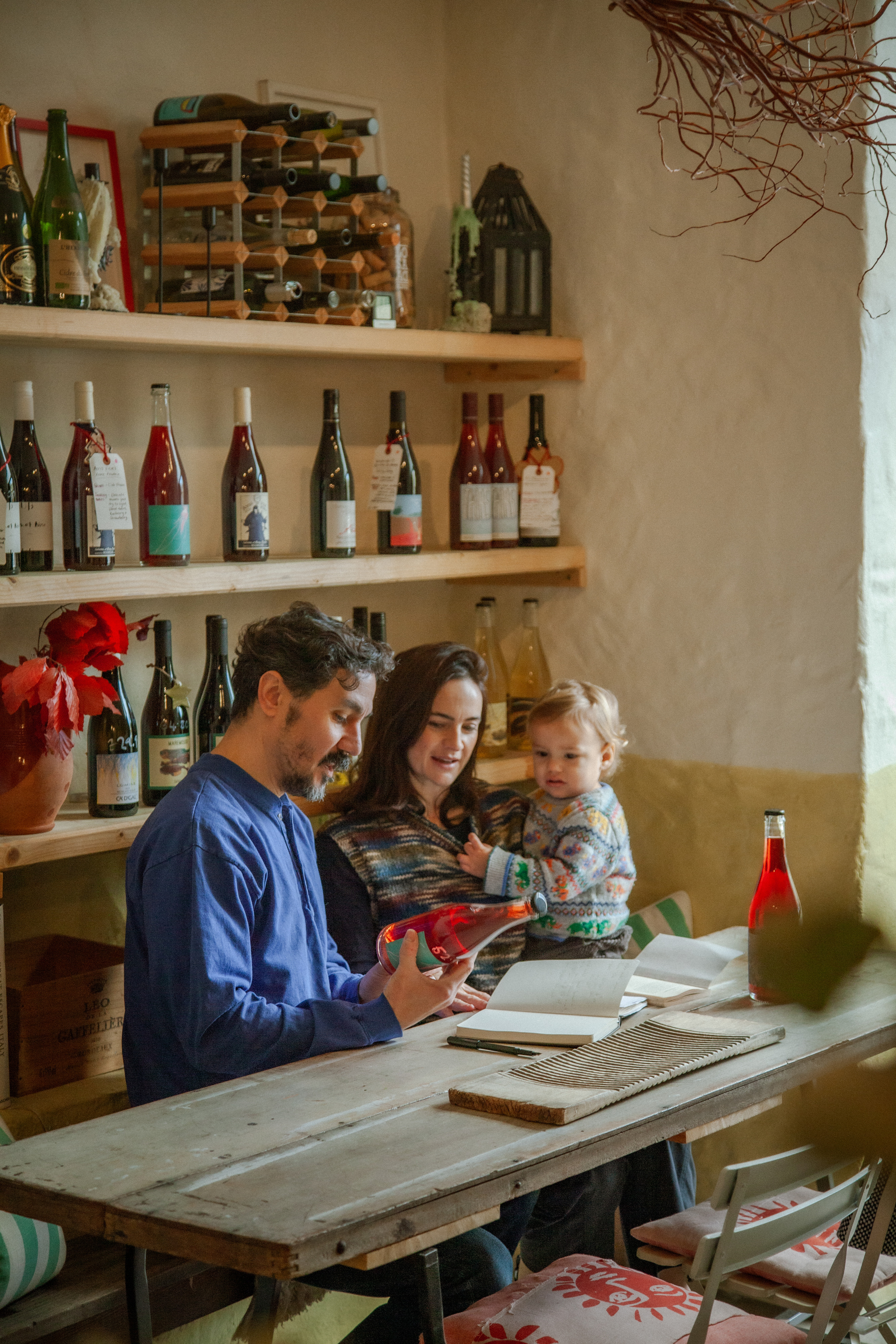
Photography by Stuart Elkins and Arran Busk for The Modern House.
Notice what a considered room does not do. It does not shout. The interiors that last are the quiet ones, where a handful of honest materials — timber, linen, wool, stone — are left to do their slow work. The rule is not deprivation; it is editing. You can hang the very same idea in a cupboard: three good shirts, worn in steady rotation, will outlast thirty that pill and sag by March.

Umber Meander — Hand-Tufted Wool Rug — shop the rug at Slow Objet.
One slow living lifestyle, different rooms
The phrase gets thrown around, so let us be plain. A slow living lifestyle is not a colour palette or a shelf of expensive candles. It is a way of deciding: fewer things, chosen with care, kept for years and repaired rather than binned. Umber Meander earns its place by exactly that test, its warm clay tone deepening rather than dulling as the light works across the wool.
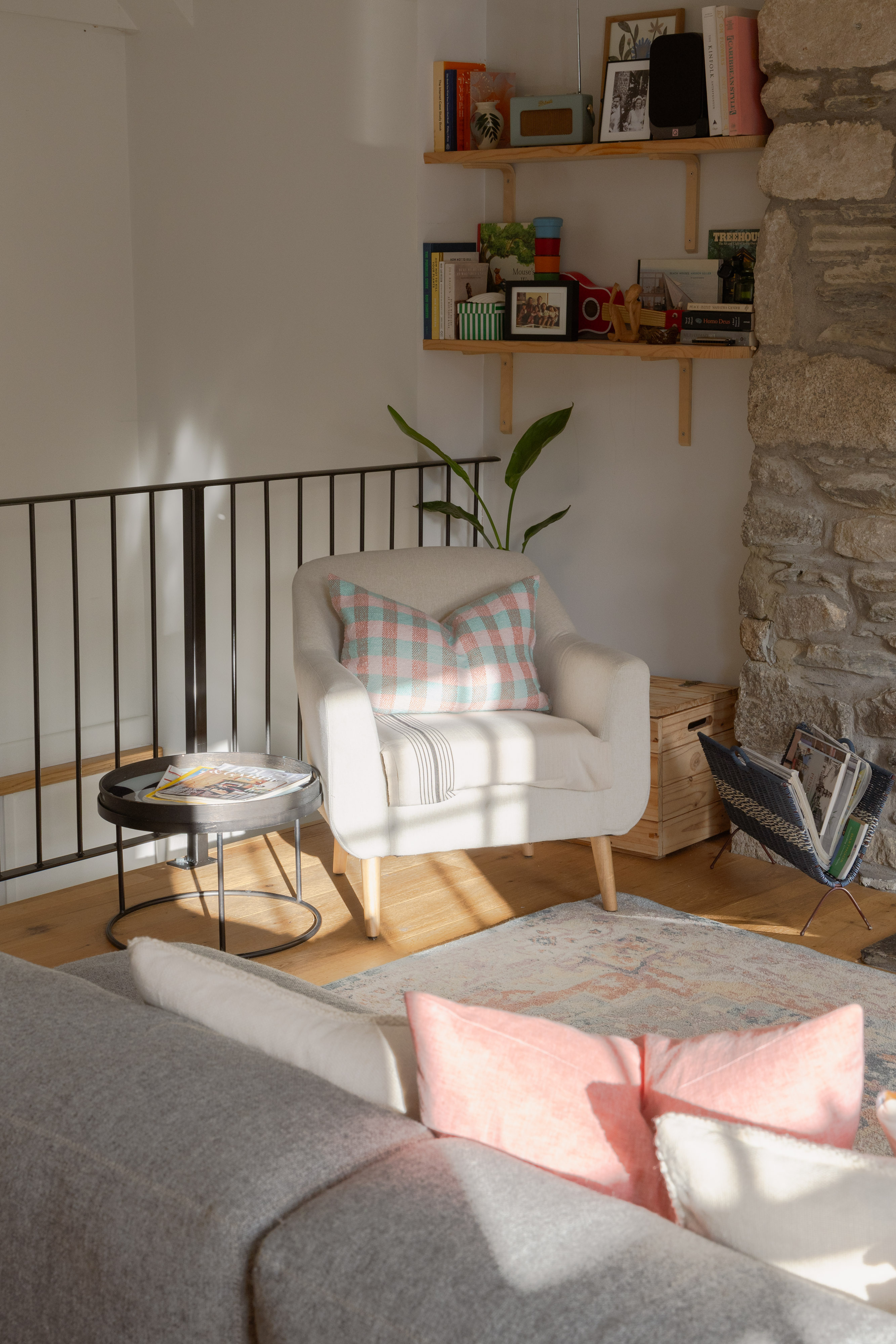
Photography by Stuart Elkins and Arran Busk for The Modern House.
Fast fashion and fast furniture run the same con: cheap now, gone soon, bought again. The sums flatter the shop and quietly cheat the buyer. A rug that survives twenty years of a family crossing it is not an expense but the opposite of one. If you have ever chosen a coat that way — the dense wool, the seams you can let out — you already know how to choose for a room, and we have set down the particulars in how to choose a handmade rug.

Bone Ripple — Hand-Tufted Wool Rug — shop the rug at Slow Objet.
The rooms you dress for yourself
Some rooms perform for visitors. Most do not. The bedroom, the reading chair, the patch of floor by the window where the low sun lands — these you furnish for no one but yourself. There is no audience to impress here, only a self to keep comfortable, and that changes what good looks like. Bone Ripple suits that private work: a pale, barely-there ground with a rippling pile that reads as calm rather than blank.
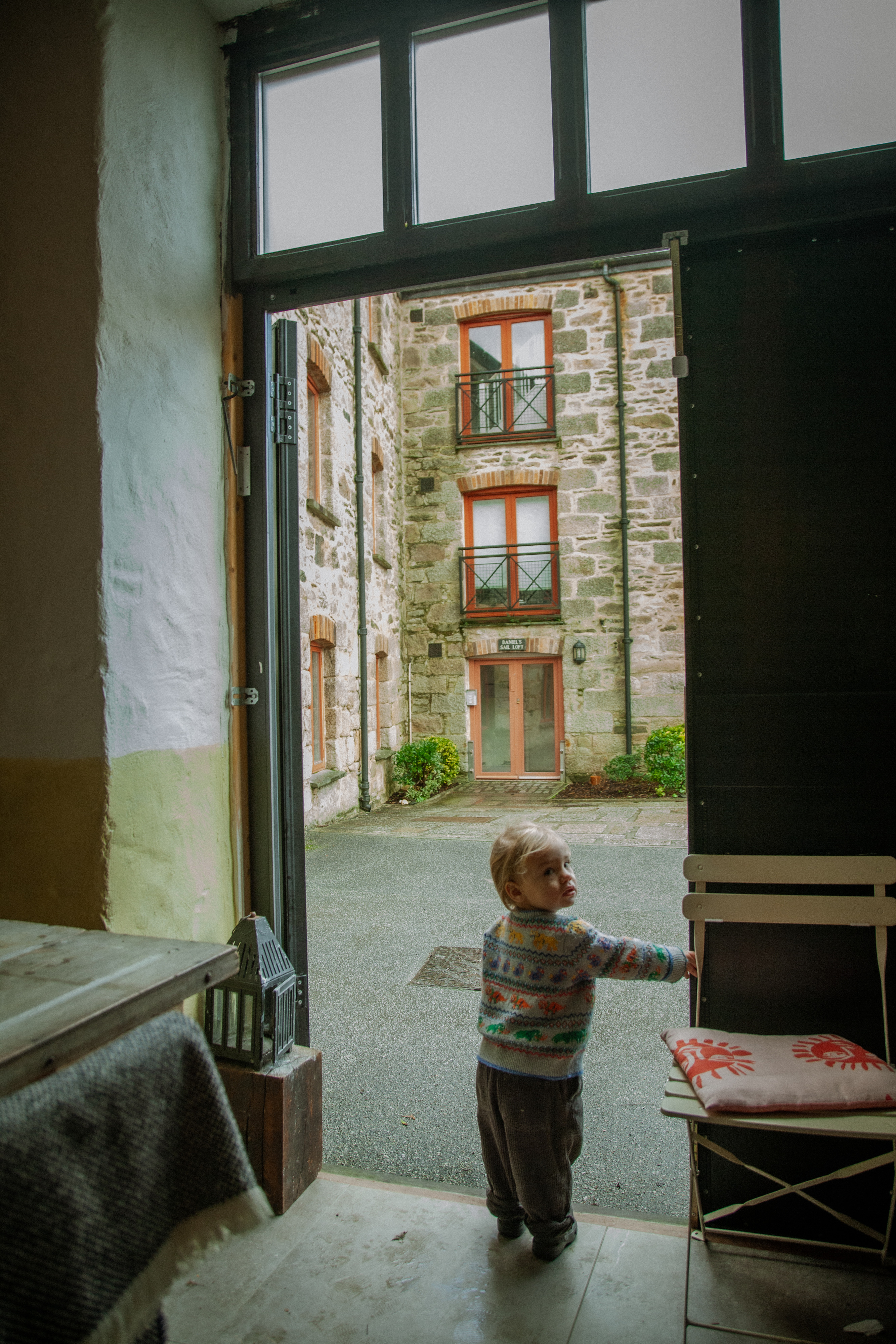
Photography by Stuart Elkins and Arran Busk for The Modern House.
Even a room built purely for pleasure is better for a little restraint. This snug wine bar works because it stops adding things at the right moment. That is the discipline the wardrobe teaches and the home so often forgets — knowing when to stop. The empty half of a shelf is not a failure to fill it; it is room left to breathe.

Soot Petal — Hand-Tufted Wool Rug — shop the rug at Slow Objet.
Materials that earn their keep
Wool is not a nostalgic choice but a practical one. It shrugs off dirt, springs back underfoot, holds warmth, and — being a natural fibre — will one day return to the earth rather than outlive us all in a landfill. Soot Petal shows what the material is capable of: a deep, sooty bloom of colour no synthetic could honestly manage. Choose the fibre first, as you would with a good jumper, and most other decisions fall into line.
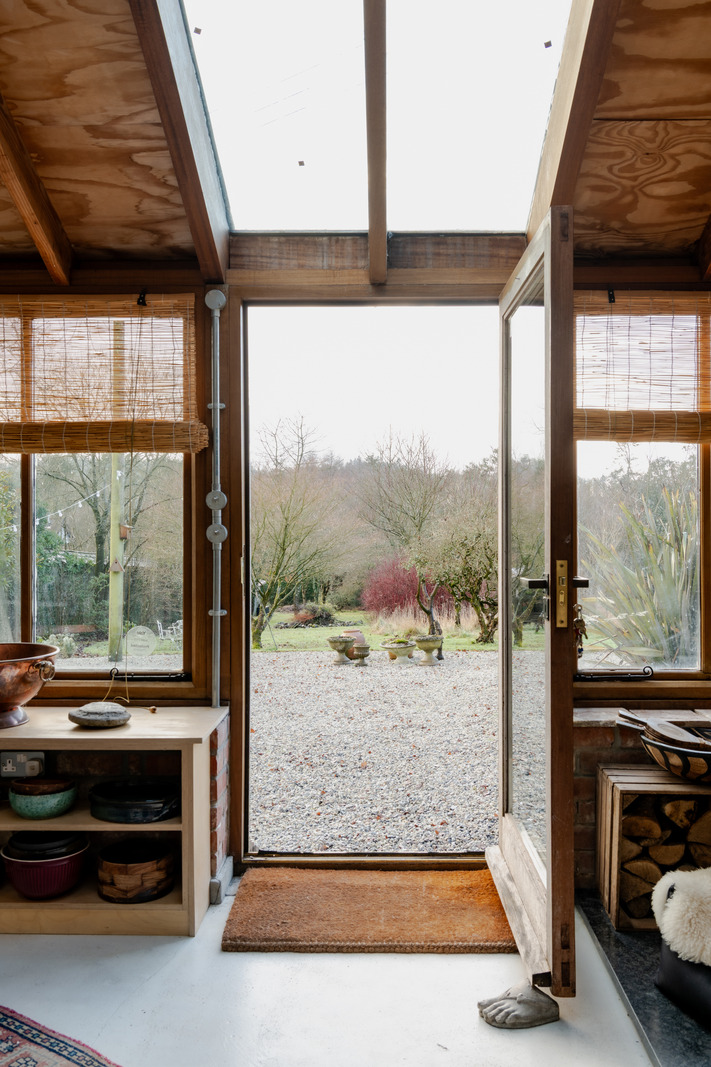
Photography by Paul Whitbread, The Modern House for The Modern House.
A converted bothy is a masterclass in keeping what already works. Thick walls, worn timber, a few well-made things set down with care — nothing here strains to look new. We have written more about that patient way of furnishing in the slow living home, if the idea draws you in. The thread never changes: let good materials age, and let the ageing be part of the point.
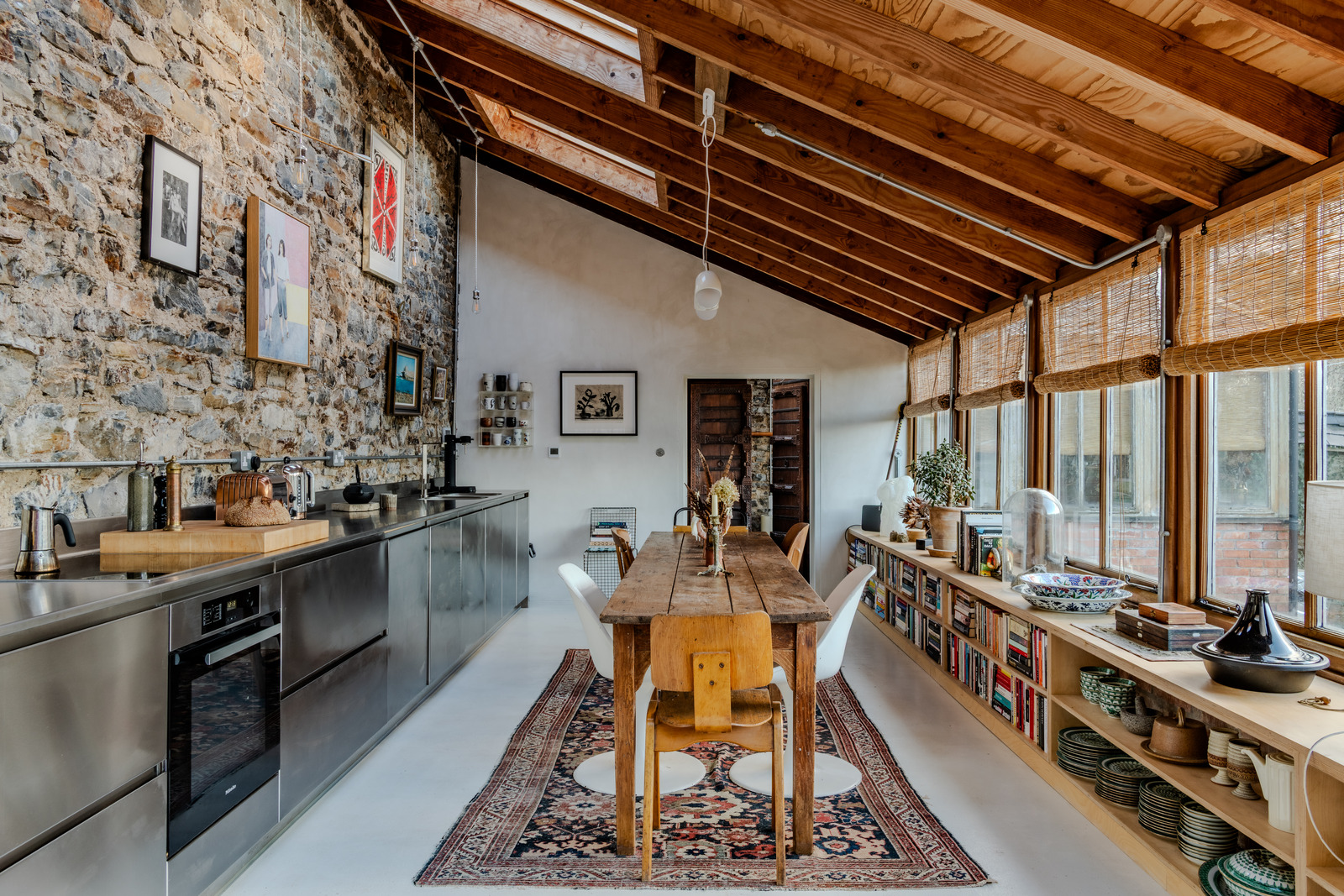
Photography by Paul Whitbread, The Modern House for The Modern House.
One philosophy, carried room to room
An artist's studio in a former squash court is not a scheme you can copy, and that is precisely the point. You do not import someone else's taste; you carry a single principle through your own rooms and let it make the decisions. Fewer things. Better made. Kept, and mended. Wear the philosophy in the wardrobe on Monday and you will recognise it underfoot by Friday. When you are ready to begin at the floor, our hand-tufted rugs are built to be the first considered thing you buy and the last you would think to replace.
Questions, answered
What does a slow living lifestyle actually mean at home?
A slow living lifestyle at home means choosing fewer, better-made things and keeping them for years instead of refreshing them on a whim. It leans on natural materials that age well, favours repair over replacement, and lets a room feel finished without being crammed. In practice it is less a style than a set of small decisions, made quietly and repeated over time.
Where should I start if my home feels cluttered?
Start at the floor and work upward. A single honest rug anchors a room and sets the standard for everything you place around it afterwards. From there, take away more than you add for a while — the gaps you leave are doing quiet, useful work.
Why choose wool over a synthetic rug?
Wool is durable, naturally stain-resistant and springs back underfoot, so it wears slowly and ages gracefully rather than matting and shedding. It holds warmth in winter, helps soften sound, and, as a natural fibre, breaks down at the close of a long life instead of lingering for centuries. A good wool rug is bought once, not again and again.
How is buying a rug like building a wardrobe?
Both reward the same instinct: choose the best material you can afford, in a form you will still like in ten years, and then look after it properly. A coat with good seams and a rug with dense hand-knotting are the same decision made in different rooms. Buy less, choose well, keep it long — the rule does not change with the object.
Do hand-tufted rugs last?
Yes, when they are made from natural wool and cared for simply. Rotate a rug now and then so wear spreads evenly, vacuum gently without a hard beater bar, and deal with spills before they set. Looked after that way, a hand-tufted wool rug comfortably outlasts the trends that felt urgent when you bought it.
Is slow living just an aesthetic?
No, though it is often sold as one. The look — pale walls, natural textures, uncluttered surfaces — is only the visible residue of the decisions beneath it. You can buy the aesthetic in an afternoon and still miss the point; the substance lives in what you choose to keep and what you refuse to replace.
Ready to begin at the floor? Explore our hand-tufted wool rugs — made slowly, and meant to be kept.
Rugs by Slow Objet, hand-tufted in India. Interior photography courtesy of The Modern House, credited beside each image.
Purposeful design, crafted for a lifetime.